Best Value
from$99/mo
SemaglutideRx
GLP-1 Receptor Agonist

SemaglutideRx
GLP-1 Receptor Agonist
TirzepatideRx
Dual GLP-1 + GIP Receptor Agonist
Semaglutide ODT PillsRx
GLP-1 Receptor Agonist - Oral Dissolving Tablet
Tirzepatide ODT PillsRx
Dual GLP-1 + GIP Receptor Agonist - Oral Dissolving Tablet
Men's Complete Hair Growth PillRx
Minoxidil, Finasteride, Biotin
Men's Advanced Hair SprayRx
Minoxidil, Finasteride, Fluocinolone, Tretinoin
Women's Premium Hair SprayRx
Minoxidil, Tretinoin, Fluocinolone, Biotin, Melatonin
Women's Complete Hair Growth PillRx
Minoxidil, Vitamin E, Biotin
Written by Join Luma Team
November 8, 2026 · 8 min read

Before starting a GLP-1 through Join Luma, prepare your health and medication history, confirm your prescription instructions, arrange supplies and storage, and make a practical food, hydration and side-effect plan. Start only as directed by your clinician.
You do not need a perfect routine on day one. The goal is to remove avoidable confusion and know whom to contact before your first dose.
Make a list of prescriptions, over-the-counter medicines, supplements and allergies. Add current conditions, past surgeries, pregnancy plans and previous weight-management treatment. Include insulin and other diabetes medicines, because your clinician may need to discuss low-blood-sugar risk and monitoring when treatment changes.
If you previously used a GLP-1 medication, record the product, formulation, dose in milligrams, last dose date and any side effects. A treatment break may change the safest starting approach. Do not assume that a dose you tolerated months ago remains appropriate now. See who reviews your intake for how this information supports the clinical decision rather than simply completing paperwork.
Ask what you are being prescribed, why that formulation fits your needs, and exactly how to take it. Confirm whether it is a weekly injection or once-daily oral ODT tablet. Ask what to do if a dose is missed, which symptoms to report and how you should handle a planned procedure involving anesthesia or sedation.
Discuss personal or family history of medullary thyroid carcinoma or MEN2, pregnancy or plans to become pregnant, prior pancreatitis, gallbladder problems, severe gastrointestinal symptoms and previous serious allergic reactions. Some findings may rule out a treatment; others need individualized evaluation. Do not try to decide which category applies on your own.
Your Join Luma plan includes necessary supplies, but check the package before the first planned dose. For a prescribed injection, confirm that you have the syringe specified for your directions and any supplies described in the instructions. Set up a clean, well-lit area where you can read small label print without rushing.
Ask your dispensing pharmacy about safe sharps disposal and how to use the supplied equipment. Do not improvise with a different syringe because the markings look similar. If you are using oral ODT tablets, review their own administration and storage directions instead of preparing injection equipment. The first-injection guide can help organize questions, but your pharmacy label and clinician’s directions remain the authority.
Plan a storage location that follows the instructions on your own prescription label and keeps medicine away from children and pets. If refrigeration is required, make space before delivery. Ask the pharmacy where the medication should sit and how to avoid freezing it; do not use brand-product storage allowances as a shortcut for a compounded preparation.
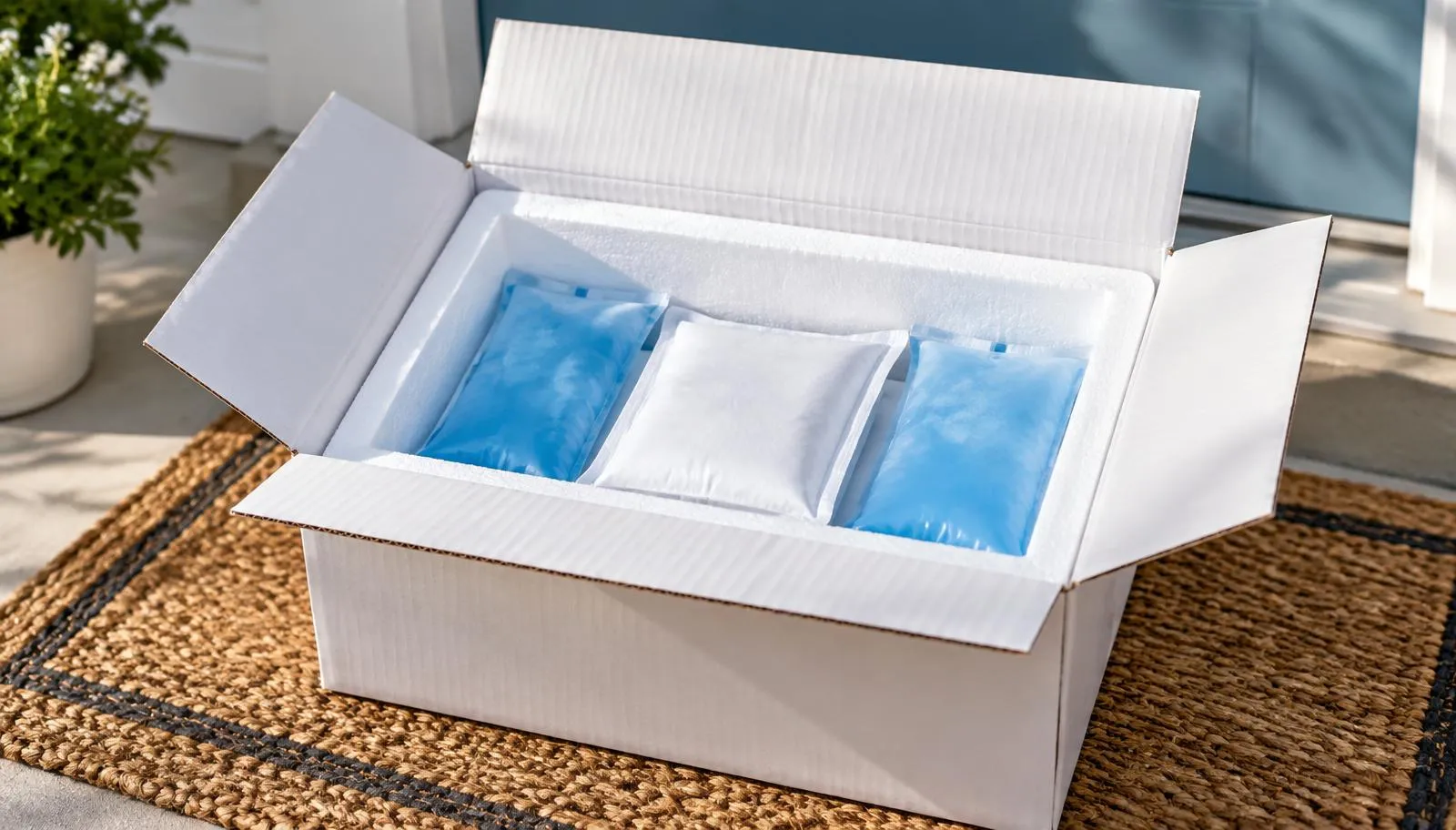
Check the beyond-use date and ask how that differs from any after-opening instructions. A printed beyond-use date does not automatically explain every handling situation. If a shipment arrives warm, do not throw it away: put it in the fridge and contact Join Luma before using it. Explain when it arrived and any packaging concern so the pharmacy can assess the situation. See how delivery works for the separate dispensing and shipping stages.
Prepare a few simple foods you can tolerate and realistic opportunities to eat. A smaller appetite can make it easier to overlook meals, so consider how you will include protein-containing foods, produce and other foods that support a balanced diet. Ask your clinician for guidance if kidney disease, digestive conditions or other medical needs affect your eating plan.
Have water accessible and discuss an appropriate fluid goal, especially if you have heart or kidney conditions or fluid restrictions. No single protein or water target fits everyone. The protein calculator can support a discussion, not replace individualized advice. Avoid turning the first week into an extreme diet experiment; aim for a manageable routine and report persistent difficulty meeting basic food or fluid needs.
The Wegovy prescribing information and Zepbound prescribing information describe FDA-approved brand products, not Join Luma’s compounded medications. Their schedules provide useful context, but your own prescription label and Join Luma clinician determine your instructions. Do not copy a brand pen schedule onto an injection vial or a once-daily dissolving tablet.
Nausea, vomiting, diarrhea, constipation and abdominal discomfort are among the effects described in brand labeling. Your experience can differ, and your clinician should guide management. Ask ahead of time what information to track: dose date, symptom timing, how much you can drink and whether symptoms interfere with eating or daily activity.
Do not increase early to chase faster results or automatically repeat a dose if vomiting occurs. Do not add anti-nausea or constipation medicines without checking whether they fit your situation. Oral ODT options include ondansetron for anti-nausea support, but that does not remove the need to report persistent symptoms. A written plan is more useful than trying to reconstruct advice when you feel unwell.
Same price every dose
A licensed provider reviews your intake. If treatment is appropriate, your medication ships free with expedited two-day delivery.
Get startedThe FDA’s dosing-error alert describes mistakes involving different concentrations and confusion between milligrams, milliliters and syringe units. Read the label on each new vial, even when the medication name looks familiar. Ask the clinician or dispensing pharmacy to confirm any measurement you cannot confidently explain back.
| Term | Meaning |
|---|---|
| Milligrams, mg | Amount of medication prescribed |
| Milligrams per milliliter, mg/mL | Concentration in the vial |
| Milliliters or syringe units | Volume or markings used to measure the prescribed amount |
Ask the pharmacy to show how your prescribed milligram amount corresponds to the supplied syringe. Read the instructions back in your own words and resolve any mismatch before using medication. Never copy another patient’s syringe units, even if you believe you take the same dose.
Seek urgent care for severe abdominal pain, signs of pancreatitis, significant dehydration, or a serious allergic reaction; call 911 for a life-threatening emergency. Do not wait for a portal reply in an emergency. For nonurgent nausea, constipation, appetite changes or uncertainty about the next dose, contact your clinician for a plan tailored to your symptoms.
Support is available 24/7 at support@joinluma.com or through the patient portal; most inquiries receive a reply within 1–2 hours. That is a typical support response window, not a guarantee of clinician review or an emergency service. Ask support to help route medical questions to your clinician rather than treating a billing reply as dosing authorization.
“Compounded drugs are not FDA-approved.”
The FDA’s compounding information explains that these preparations are not reviewed before marketing for safety, effectiveness or quality. That distinction is a reason to understand your own prescription and care plan, not to assume brand-product directions apply to every formulation.
Compounded medications are not FDA-approved and are not reviewed by the FDA for safety, effectiveness or quality before marketing. Brand-product study results describe the FDA-approved products studied. A licensed clinician decides whether treatment is appropriate; follow your prescription label and your clinician's directions.
This article is for educational purposes only and is not intended to provide medical advice, diagnosis, or treatment. Individual treatment decisions should be made with a licensed healthcare provider.
You do not need to invent an extreme diet before starting Join Luma treatment. Ask your clinician about a sustainable eating plan and any medical restrictions.
Yes, if your prescribed product requires refrigeration. Follow the dispensing pharmacy’s label for storage rather than brand-product instructions.
Do not throw the medication away. Put it in the fridge and contact Join Luma for guidance before using it.
Check with the dispensing pharmacy before changing syringe types. The correct markings depend on your prescription, concentration and supplied equipment.
Not without clinician approval. Report the previous medication, dose and last dose date so the clinician can assess whether a restart adjustment is needed.
Seek urgent care for severe abdominal pain or signs of pancreatitis, rather than waiting for a Join Luma portal reply. Call 911 for a life-threatening emergency.
Share this article