Best Value
from$99/mo
SemaglutideRx
GLP-1 Receptor Agonist

SemaglutideRx
GLP-1 Receptor Agonist
TirzepatideRx
Dual GLP-1 + GIP Receptor Agonist
Semaglutide ODT PillsRx
GLP-1 Receptor Agonist - Oral Dissolving Tablet
Tirzepatide ODT PillsRx
Dual GLP-1 + GIP Receptor Agonist - Oral Dissolving Tablet
Men's Complete Hair Growth PillRx
Minoxidil, Finasteride, Biotin
Men's Advanced Hair SprayRx
Minoxidil, Finasteride, Fluocinolone, Tretinoin
Women's Premium Hair SprayRx
Minoxidil, Tretinoin, Fluocinolone, Biotin, Melatonin
Women's Complete Hair Growth PillRx
Minoxidil, Vitamin E, Biotin
Written by Join Luma Team
November 8, 2026 · 8 min read
For your first GLP-1 injection, confirm your prescribed syringe marking, prepare clean supplies, inject into the instructed fatty tissue, and dispose of the syringe immediately.
This guide covers vial-and-syringe basics, not a replacement for hands-on instruction. Ask your Join Luma clinician or dispensing pharmacist to demonstrate anything that is unclear before you begin.
Set aside an unhurried few minutes in a clean, well-lit area. Read your label from beginning to end before opening a syringe. Confirm your name, medication, prescribed dose, concentration, storage directions and beyond-use date. Check the liquid against the pharmacy’s description; ask the pharmacy about unexpected particles, discoloration or a damaged vial.
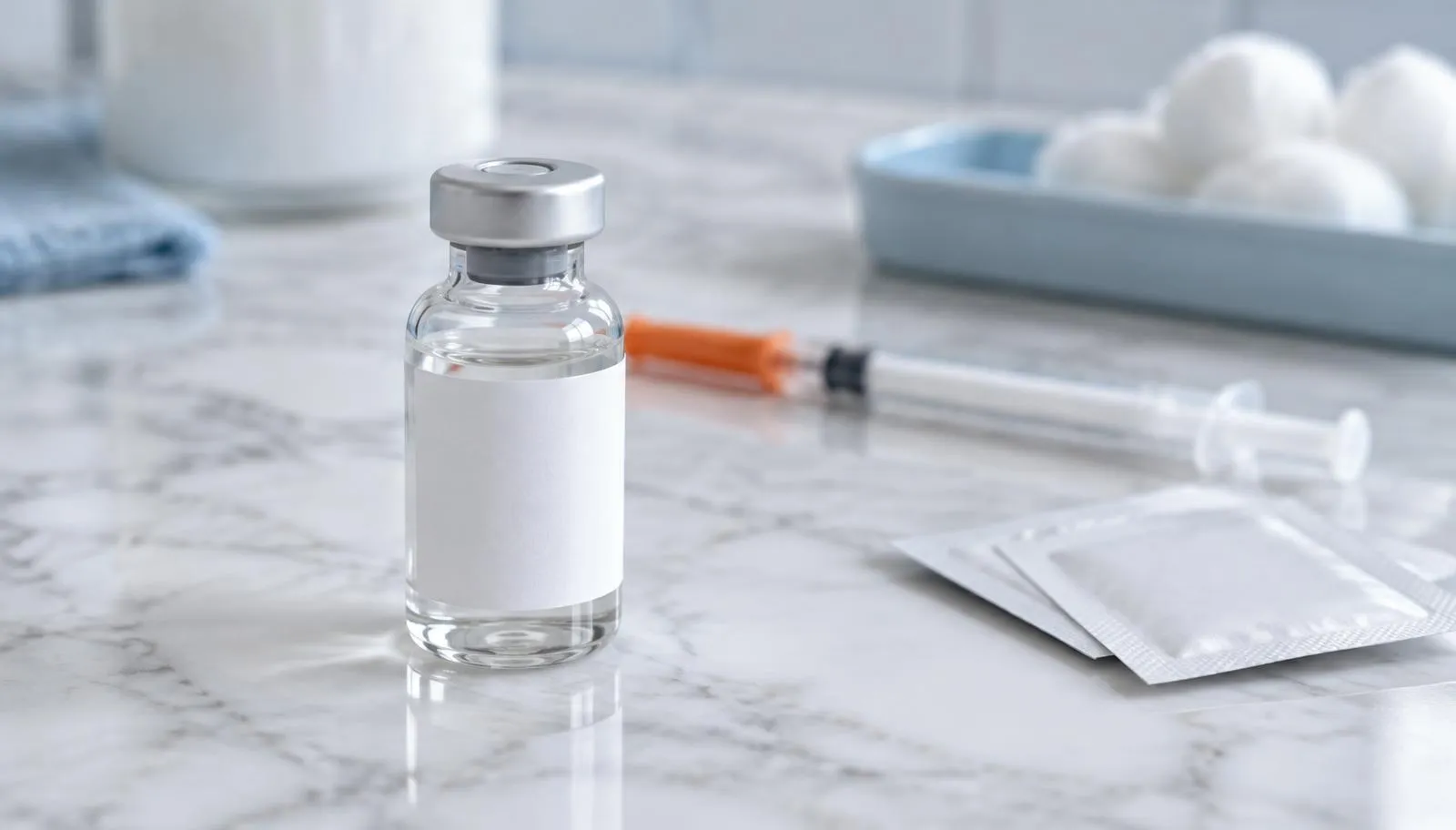
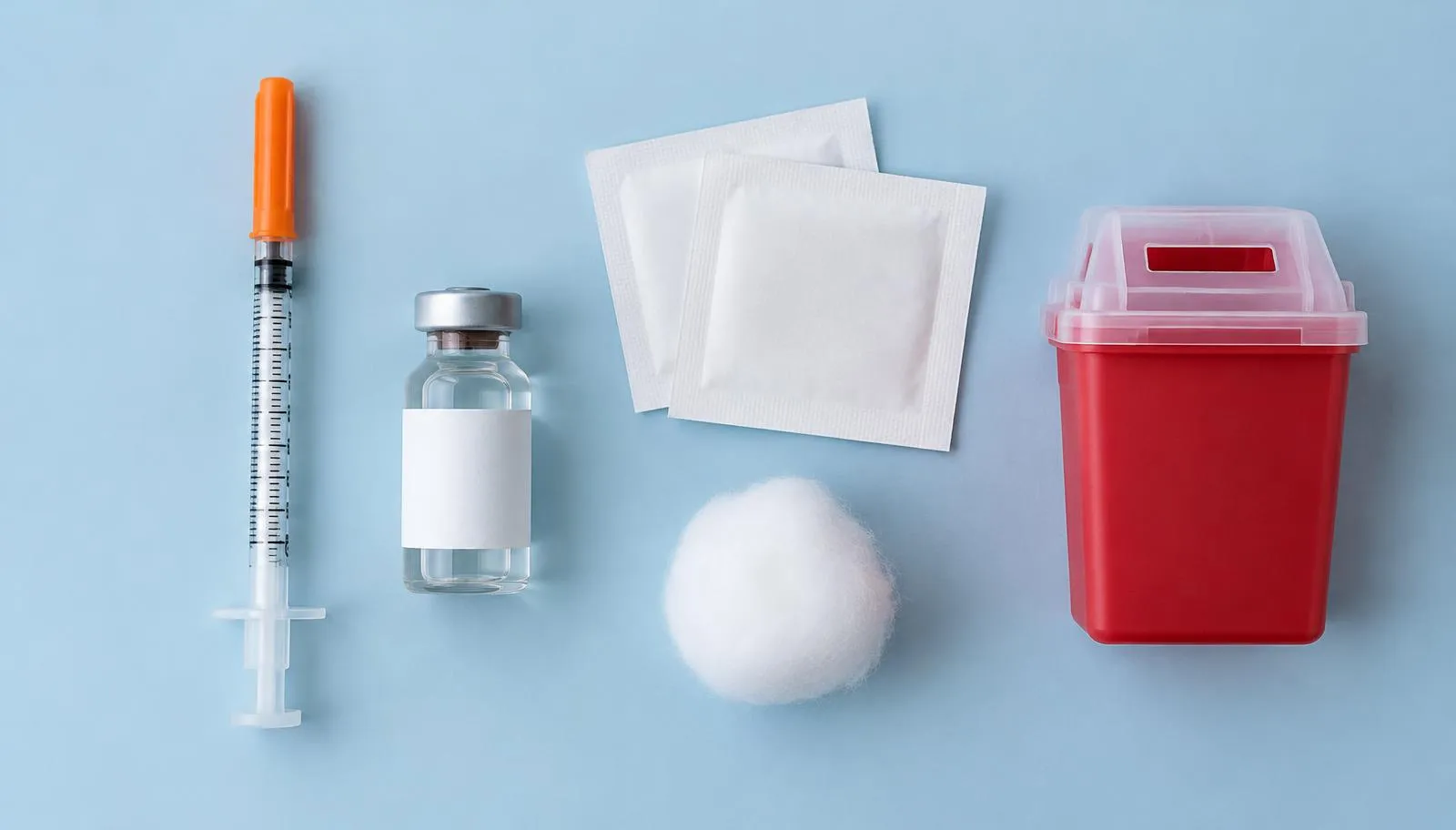
Gather the vial, the exact syringe supplied for your prescription, alcohol swabs, gauze and a sharps container within reach. Weekly weight-loss injections are not interchangeable with daily tablets. If you have a pen rather than a vial, use that device’s instructions instead of the drawing steps below.
Milligrams measure the amount of medication. Milliliters measure liquid volume. Syringe units are markings on a particular syringe, not a universal semaglutide or tirzepatide dose. The same marking can deliver different medication amounts when the vial concentration changes. Read the label every time, including after a refill.
Ask the pharmacist to identify the exact line for your dose on your actual syringe. Do not convert from a social-media chart or copy your previous vial’s units unless the care team has confirmed they still apply. The FDA alert about dosing errors with compounded injectable semaglutide describes overdoses related to measurement confusion. Our mg, mL and units guide explains the terms without replacing your prescription.
“FDA encourages patients to talk with their health care provider or compounder about how to measure and administer the intended dose of compounded semaglutide.”
The Drawing medicine out of a vial provides general vial technique. Follow any medication-specific handling directions from your dispensing pharmacy. Do not shake or mix your medication unless the pharmacy explicitly instructs you to do so.
| Area | Practical check |
|---|---|
| Abdomen | Choose healthy fatty tissue at least 2 inches from the navel. |
| Thigh | Use the area shown in your medication instructions. |
| Upper arm | Use the instructed back/outer area; a trained helper may be needed. |
Choose intact skin, avoiding bruises, scars, redness, swelling and hard spots. Rotate to a different spot each week rather than repeatedly piercing one location. Review our tirzepatide injection-site guide if that is your medication.
Clean the selected skin with a new alcohol swab and allow it to dry. Gently hold a fold of skin if you were taught to do so. Insert the needle at the angle demonstrated for your needle length and body tissue; general subcutaneous guidance describes 45- or 90-degree angles, but your clinician should show which fits your supplies. Push the plunger steadily until the prescribed amount is delivered, then withdraw as instructed. Do not inject into a vein or muscle. The Subcutaneous (SQ) injections explains general technique.
You may feel a brief pinch or mild stinging, or very little at all. A tiny spot of blood can happen; apply gentle pressure with clean gauze rather than rubbing. A small bruise does not by itself mean the medicine failed. Do not repeat an injection because it felt painless, and do not give a replacement dose if you are unsure how much entered—ask the care team.
Place the whole used syringe directly into an FDA-cleared sharps container without recapping, bending or breaking the needle. Never put loose needles into household trash or recycling, and never flush them. The Best Way to Get Rid of Used Needles and Other Sharps recommends closing and disposing of the container according to local rules when it is about three-quarters full.
Return the vial to the storage conditions on its label and record the date, prescribed dose and injection location. Appetite or stomach changes may appear later, not at the moment of injection. The first-two-weeks guide helps you track the early adjustment period without expecting a specific result on day one.
Seek urgent care for severe or persistent abdominal pain, especially pain that spreads to your back, persistent vomiting, inability to keep fluids down, or signs of dehydration such as very little urine or marked dizziness. These are not symptoms to simply push through until your next appointment. Severe stomach pain can signal pancreatitis or another condition needing prompt assessment.
Call 911 for trouble breathing, swelling of the face, lips, tongue or throat, fainting, or other signs of a severe allergic reaction. Do not take another dose while a serious medication reaction is being assessed. If you use insulin or a sulfonylurea, ask your clinician about low blood sugar and follow your existing treatment plan for it. The Wegovy prescribing information and Medication Guide and Zepbound prescribing information and Instructions for Use describe these precautions.
Your prescription label and Join Luma clinician’s directions take priority over general information about brand-name products. Compounded semaglutide and compounded tirzepatide are not FDA-approved. FDA-approved brand labels provide useful reference information, but their devices, concentrations, storage allowances and study results do not automatically apply to a compounded prescription.
The Understanding the Risks of Compounded Drugs explains this distinction. Keep the pharmacy label available when asking a question: it identifies the medication, concentration, directions and beyond-use date. A photograph of that label and the supplied syringe can help the care team resolve a measurement question without guessing. Never use someone else’s dose or syringe marking as your own instructions.
Same price every dose
A licensed provider reviews your intake. If treatment is appropriate, your medication ships free with expedited two-day delivery.
Get startedCompounded medications are not FDA-approved and are not reviewed by the FDA for safety, effectiveness or quality before marketing. Brand-product study results describe the FDA-approved products studied. A licensed clinician decides whether treatment is appropriate; follow your prescription label and your clinician's directions.
This article is for educational purposes only and is not intended to provide medical advice, diagnosis, or treatment. Individual treatment decisions should be made with a licensed healthcare provider.
FDA-approved Wegovy and Zepbound injections may be used with or without food. Follow your own prescription label and Join Luma clinician’s directions.
No. Use a new sterile syringe and needle for each injection, and place used supplies immediately in a sharps container.
No. Sensation does not confirm how much medication was delivered; do not repeat a dose based on how the shot felt.
Do not inject a syringe you cannot confidently measure. Ask your dispensing pharmacist or Join Luma care team to confirm the correct marking for your vial and syringe.
You may use the same general body region, but choose a different healthy spot for each injection. Avoid a location that is bruised, tender or irritated.
Share this article