Best Value
from$99/mo
SemaglutideRx
GLP-1 Receptor Agonist

SemaglutideRx
GLP-1 Receptor Agonist
TirzepatideRx
Dual GLP-1 + GIP Receptor Agonist
Semaglutide ODT PillsRx
GLP-1 Receptor Agonist - Oral Dissolving Tablet
Tirzepatide ODT PillsRx
Dual GLP-1 + GIP Receptor Agonist - Oral Dissolving Tablet
Men's Complete Hair Growth PillRx
Minoxidil, Finasteride, Biotin
Men's Advanced Hair SprayRx
Minoxidil, Finasteride, Fluocinolone, Tretinoin
Women's Premium Hair SprayRx
Minoxidil, Tretinoin, Fluocinolone, Biotin, Melatonin
Women's Complete Hair Growth PillRx
Minoxidil, Vitamin E, Biotin
Written by Join Luma Team
November 8, 2026 · 8 min read
Tirzepatide injections go into fatty tissue under the skin of the abdomen, thigh or upper arm, following your prescription instructions; keep abdominal injections at least 2 inches from the navel.
Rotate the exact spot with every injection. The Zepbound label reports similar tirzepatide exposure across these regions, so comfort and safe technique matter more than searching for a “strongest” site.
The Zepbound prescribing information and Instructions for Use identifies the abdomen, thigh and back of the upper arm as subcutaneous injection areas. Subcutaneous means the medicine goes into fatty tissue just beneath the skin, not into muscle or a vein. Use the area diagrams and technique supplied for your actual medication and delivery device.
| Area | Placement and practical considerations |
|---|---|
| Abdomen | Choose the instructed area at least 2 inches from the belly button. Avoid tender or damaged skin. |
| Thigh | Use the thigh region shown in your instructions, with a stable position and relaxed leg. |
| Upper arm | Use the back of the upper arm; the Zepbound instructions call for another person to give the injection here. |
A compounded vial is not a Zepbound pen. The general anatomical areas are useful references, but needle selection, angle and syringe marking should come from your Join Luma clinician and dispensing pharmacy. Our first-injection guide explains the vial-and-syringe workflow.
“Similar exposure was achieved with subcutaneous administration of tirzepatide in the abdomen, thigh, or upper arm.”
That sentence from Zepbound’s pharmacokinetic section means the label does not identify one of those regions as the best way to increase drug exposure. It does not promise that every injection will feel identical or that local skin reactions can never differ.
Choose a location you can reach safely, clean properly and inspect afterward. There is no need to chase an abdominal spot because a friend reports faster weight loss there. Claims that the thigh reliably prevents nausea or that the arm produces stronger weight loss are not established by this label statement. Discuss recurring side effects with your clinician rather than using site changes as a substitute for a medication review.
Rotate the exact injection spot with every weekly dose. You can return to the same general region while choosing a different healthy point within it. For example, using different abdominal spots is rotation; repeatedly piercing a single small location is not. Avoid any spot that remains bruised, sore, firm or irritated from a previous injection.
General Subcutaneous (SQ) injections guidance recommends changing the injection location and keeping sites at least an inch apart. Follow any more specific directions supplied with your prescription. Rotation is a skin-care habit, not a reason to alter how much medicine you inject.
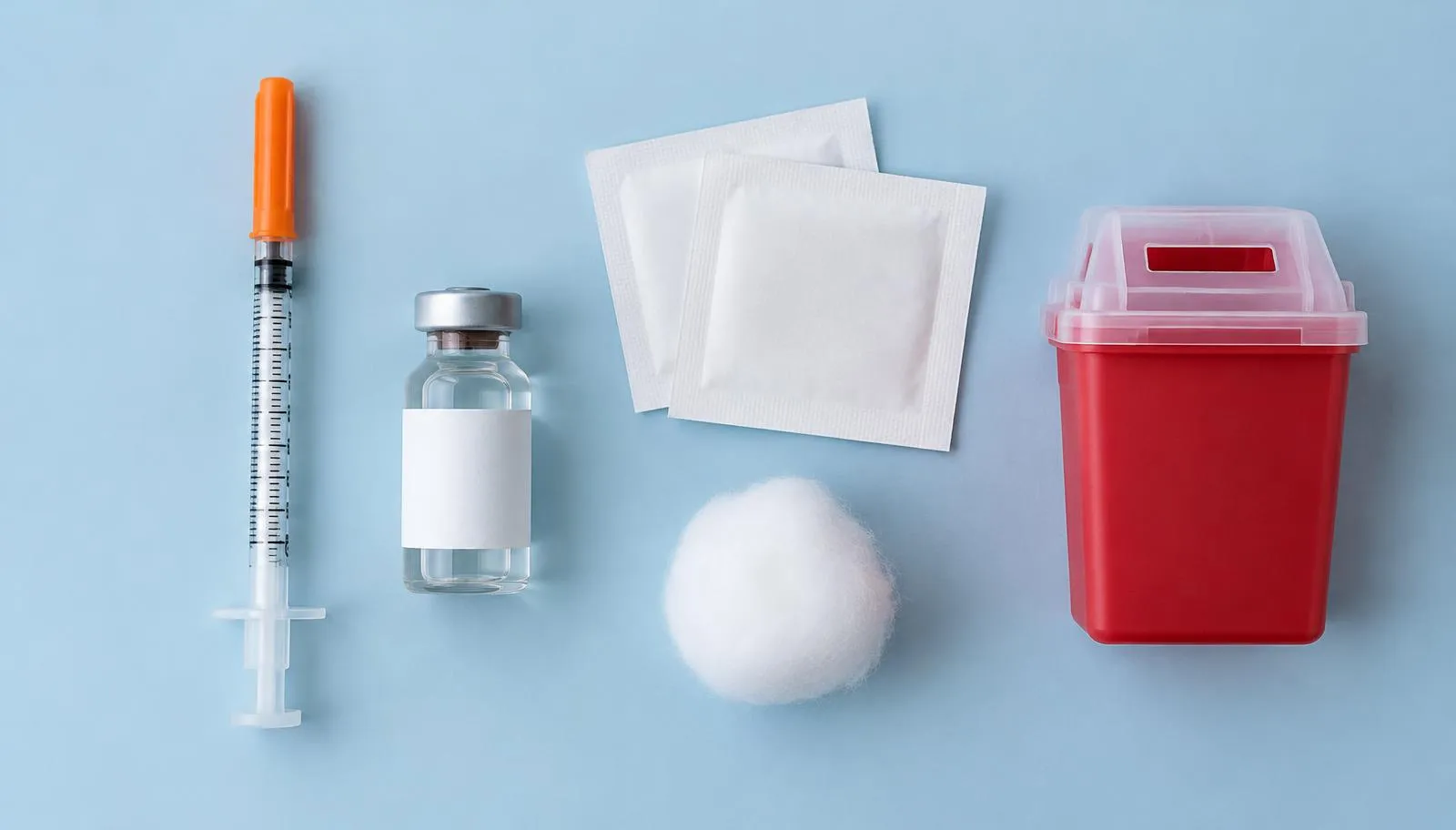
Wash your hands, prepare a clean surface and use a new sterile syringe and needle. Wipe the vial stopper with alcohol before drawing medication and clean the selected skin with a fresh swab. Let the skin dry before inserting the needle. Wet alcohol can sting, and touching cleaned skin can undo your preparation.
Relax the area and use the angle and skin-fold technique demonstrated for your particular supplies. Do not jab repeatedly or redirect a needle under the skin. After withdrawing, apply gentle pressure with clean gauze if there is a small drop of blood; avoid vigorous rubbing. A small bruise can happen even with reasonable technique, especially if you take medicines affecting bleeding.
Do not stop a prescribed blood thinner to prevent a bruise. Instead, tell your clinician about frequent or large bruises and review your technique. The Drawing medicine out of a vial covers preparing and drawing from a vial. Ask the pharmacist for a demonstration if needle handling or syringe markings are uncertain.
A small area of mild redness, itching or tenderness can occur with injectable medication. Zepbound labeling includes injection-site reactions among reported adverse reactions. Note the size, how long it lasts and whether it improves; a dated photograph can be useful when contacting your care team.
Contact a clinician promptly if the area becomes increasingly painful, hot, swollen or red, develops drainage, or is accompanied by fever. These findings need assessment rather than assuming every skin change is an ordinary medication reaction. Do not inject into the affected skin while seeking guidance about where to administer future doses.
A local irritated spot is different from a severe allergic reaction. Widespread hives with breathing trouble, throat or facial swelling, fainting or rapidly worsening symptoms warrants calling 911. Do not wait for a portal reply or try a different injection location to see whether a serious reaction happens again.
A little moisture or a drop of blood does not tell you how much medicine was delivered. Do not automatically repeat the injection or estimate a replacement amount. Record what happened, the syringe marking you used and whether you noticed a device problem, then contact Join Luma or the dispensing pharmacist for individualized advice.
The next dose is not a chance to “make up” an uncertain amount. Our missed-dose guide explains brand-label timing references, but a partial or uncertain injection is a different question. Your care team needs the actual product and circumstances before advising you.
Immediately place the used needle and syringe in an appropriate sharps container. Never reuse them to correct a dose or save them for next week. The Best Way to Get Rid of Used Needles and Other Sharps explains safe containment and disposal according to local requirements. Keep the container within reach before starting so you do not need to carry an exposed needle across the room.
Your prescription label and Join Luma clinician’s directions take priority over general information about brand-name products. Compounded semaglutide and compounded tirzepatide are not FDA-approved. FDA-approved brand labels provide useful reference information, but their devices, concentrations, storage allowances and study results do not automatically apply to a compounded prescription.
The Understanding the Risks of Compounded Drugs explains this distinction. Keep the pharmacy label available when asking a question: it identifies the medication, concentration, directions and beyond-use date. A photograph of that label and the supplied syringe can help the care team resolve a measurement question without guessing. Never use someone else’s dose or syringe marking as your own instructions.
Same price every dose
A licensed provider reviews your intake. If treatment is appropriate, your medication ships free with expedited two-day delivery.
Get startedCompounded medications are not FDA-approved and are not reviewed by the FDA for safety, effectiveness or quality before marketing. Brand-product study results describe the FDA-approved products studied. A licensed clinician decides whether treatment is appropriate; follow your prescription label and your clinician's directions.
This article is for educational purposes only and is not intended to provide medical advice, diagnosis, or treatment. Individual treatment decisions should be made with a licensed healthcare provider.
The Zepbound label reports similar tirzepatide exposure in the abdomen, thigh and upper arm. Choose an instructed, healthy location you can use safely rather than expecting one area to produce stronger weight loss.
Zepbound’s Instructions for Use specify at least 2 inches from the belly button for abdominal injections. Follow the placement instructions for your prescription.
The Zepbound instructions call for another person to inject the back of the upper arm. Ask your Join Luma clinician about an accessible alternative if you do not have trained help.
Avoid bruised, tender, red, hard or otherwise damaged skin. Select another instructed healthy spot and contact your clinician about unusual or persistent bruising.
The Zepbound label does not establish that one site reliably prevents nausea. Discuss troublesome nausea with your clinician rather than relying on site selection alone.
Share this article