Best Value
from$99/mo
SemaglutideRx
GLP-1 Receptor Agonist

SemaglutideRx
GLP-1 Receptor Agonist
TirzepatideRx
Dual GLP-1 + GIP Receptor Agonist
Semaglutide ODT PillsRx
GLP-1 Receptor Agonist - Oral Dissolving Tablet
Tirzepatide ODT PillsRx
Dual GLP-1 + GIP Receptor Agonist - Oral Dissolving Tablet
Men's Complete Hair Growth PillRx
Minoxidil, Finasteride, Biotin
Men's Advanced Hair SprayRx
Minoxidil, Finasteride, Fluocinolone, Tretinoin
Women's Premium Hair SprayRx
Minoxidil, Tretinoin, Fluocinolone, Biotin, Melatonin
Women's Complete Hair Growth PillRx
Minoxidil, Vitamin E, Biotin
Written by Join Luma Team
November 16, 2026 · 7 min read
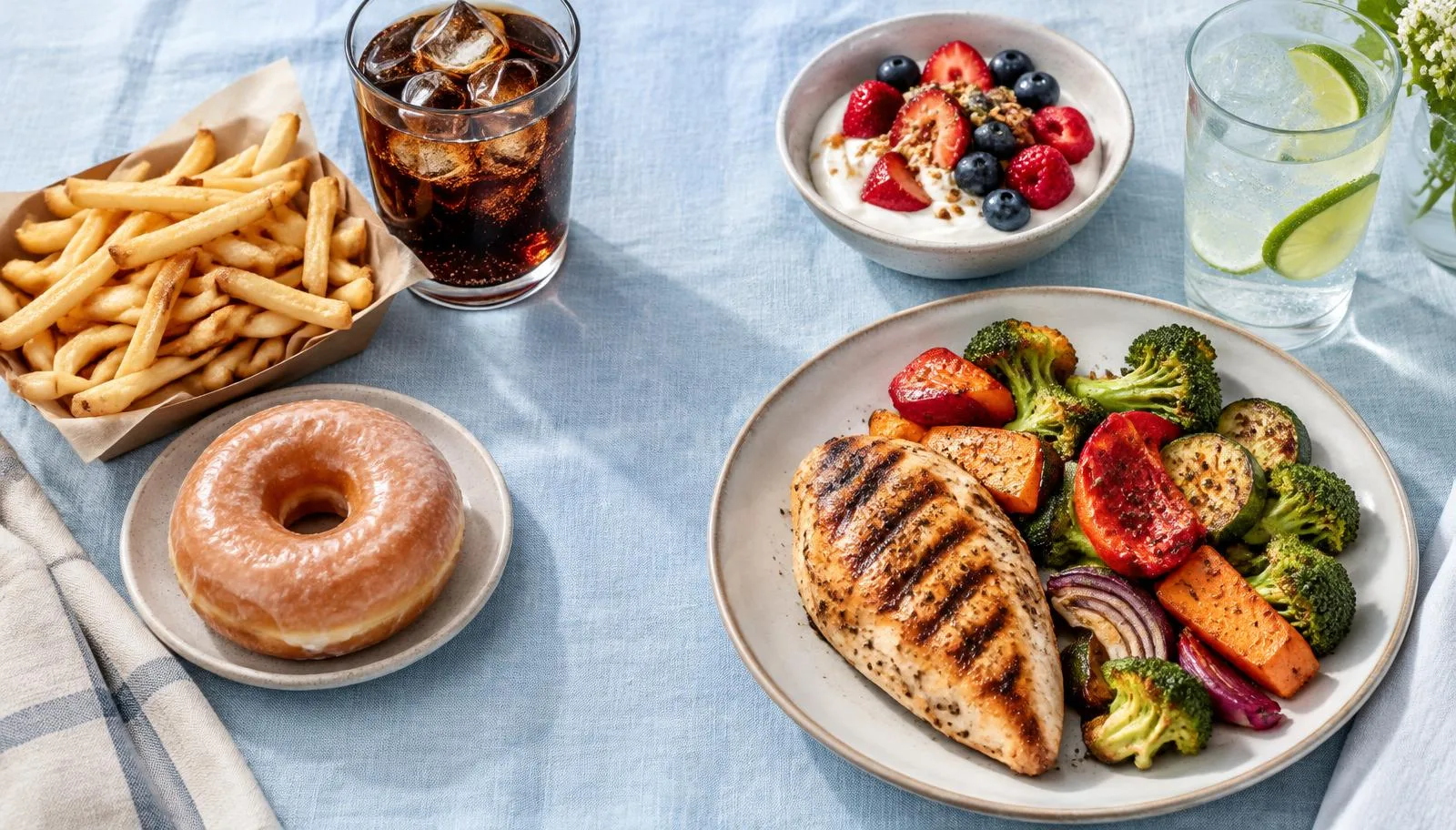
On a GLP-1 medication, the main foods to avoid or limit are greasy and fried foods, sugary drinks, refined carbs and sweets, red and processed meats, most fast food, alcohol and large meals.
No food is strictly banned. These foods are worth limiting because they can make nausea, bloating and reflux worse, and they fill up your smaller appetite without giving you much protein, fiber or vitamins.
GLP-1 medications such as semaglutide (Ozempic, Wegovy) and tirzepatide (Zepbound, Mounjaro) slow down how fast food leaves your stomach. That is part of why you feel full sooner and longer. It also means heavy foods can sit in your stomach longer than usual.
“WEGOVY causes a delay of gastric emptying”
When food stays in your stomach longer, rich or large meals are more likely to cause nausea, bloating, burping or heartburn. And since you'll probably eat less overall, filling up on low-nutrient foods leaves less room for the protein, fiber and vitamins your body needs.
A 2025 joint advisory from four U.S. nutrition and obesity medicine groups lists the foods people on GLP-1 medications should keep to a minimum:
“Individuals should be counseled to avoid refined carbohydrates (i.e., refined grains, flour, starches, sugars), sugar-sweetened beverages, red and processed meats, and most fast foods, ultraprocessed sweets, and savory snacks”
| Limit these | Why | Try instead |
|---|---|---|
| Fried and greasy foods (fries, fried chicken, pizza, creamy sauces) | Fat slows digestion even more and is a common nausea trigger | Baked, grilled or air-fried versions; tomato-based sauces |
| Sugary drinks (soda, sweet tea, juice, sweet coffee drinks) | Lots of sugar and calories with no fullness or protein | Water, sparkling water, unsweetened tea or coffee |
| Refined carbs and sweets (white bread, pastries, candy, cookies) | Little fiber or protein; can leave you hungry later | Oats, whole-grain bread, fruit, Greek yogurt with berries |
| Red and processed meats (bacon, sausage, hot dogs, deli meats) | Often high in fat and salt; harder on a slow stomach | Chicken, turkey, fish, eggs, tofu, beans |
| Fast food and salty snacks (chips, packaged snacks) | High in fat and salt, low in nutrients | Nuts in small portions, veggies with hummus, popcorn |
| Alcohol | Can worsen nausea and reflux, and adds empty calories | Sparkling water with lime, or keep drinks minimal |
| Large meals of any food | Overfilling a slow stomach can cause fullness, nausea and vomiting | Smaller meals every 3 to 4 hours |
High-fat meals take the longest to digest. On a GLP-1, a burger and fries or a big plate of fried food can sit heavy for hours. Many people say these meals are the most likely to cause nausea, burping or an upset stomach, especially in the first weeks and after a dose increase.
“Avoidance of large or high-fat meals can be helpful”
You don't need to cut out fat completely. Small amounts of healthy fats, like olive oil, avocado or a few nuts, are part of a good diet. The goal is to skip the very greasy, fried and heavy meals.
It's best to keep alcohol to a minimum. The advisory notes that alcohol can make two common GLP-1 side effects worse:
“Alcohol use may also worsen nausea and gastroesophageal reflux with GLP-1 therapy and should be minimized”
Alcohol also adds calories and can make it easier to get dehydrated. Many people find they want to drink less on a GLP-1 anyway. Read more in semaglutide and alcohol and tirzepatide and alcohol.
If a side effect is bothering you, small food changes can help:
Get help right away
Get help right away
Tell your doctor if nausea, vomiting or diarrhea won't go away, or if you can't keep fluids down. Call 911 or seek emergency care for severe stomach pain that won't go away, signs of an allergic reaction, or trouble breathing or swallowing.
How you eat matters as much as what you eat. Try to avoid:
Have a procedure or surgery coming up? GLP-1 medications slow stomach emptying, so tell the doctor doing your procedure that you take one. They may give you specific instructions about eating and drinking beforehand.
Build small meals around lean protein, vegetables, fruit, whole grains, beans, nuts and healthy oils, and eat protein first. Small, planned treats are fine; it's the everyday habits that count. Our full guide on what to eat on semaglutide includes a sample day of meals, and these tips work the same way on tirzepatide.
Yes. The same eating habits help whether you take a brand-name or compounded GLP-1. Compounded semaglutide and tirzepatide are made by a licensed pharmacy for an individual patient with a prescription. Compounded medications are not FDA-approved, and they are not the same products as Ozempic, Wegovy, Zepbound or Mounjaro. The FDA explains this difference.
At Join Luma, compounded GLP-1 medications come from U.S. licensed 503A pharmacies, and every batch is tested by an outside lab. Test documents are available on request.
Same price every dose
A licensed provider reviews your intake. If treatment is appropriate, your medication ships free with expedited two-day delivery.
Get startedStart with a short online intake. A licensed doctor reviews it, usually within 24 hours, and decides whether semaglutide or tirzepatide is right for you. If you're prescribed, your medication ships free in 2 days with syringes and alcohol pads included. Support is available 24/7 if you have questions about food, side effects or your plan.
Join Luma keeps the same price at every dose, with no membership fees. New GLP-1 patients can start compounded semaglutide at $99/mo for the first 3 months ($297 upfront), or compounded tirzepatide at $149/mo ($447 upfront). This discount helps people new to GLP-1 medication get started, then renews at affordable current-user pricing for the same plan length. Current GLP-1 users can choose a 6-month plan: semaglutide at $99/mo ($594 upfront) or tirzepatide at $149/mo ($894 upfront). You can also split upfront payments with Affirm, Klarna or Afterpay.
| Treatment | Starting at | 3-month total |
|---|---|---|
| Compounded semaglutide | $99/mo | $297 upfront |
| Compounded tirzepatide | $149/mo | $447 upfront |
| Compounded semaglutide ODT | $159/mo | $477 upfront |
| Compounded tirzepatide ODT | $179/mo | $537 upfront |
Current GLP users can access the same injection starting rates with a six-month plan: compounded semaglutide $99/mo ($594 upfront); compounded tirzepatide $149/mo ($894 upfront). Pay upfront or use Affirm, Klarna or Afterpay to split the payments, subject to eligibility and approval. Other billing options and oral current-user prices are listed on the pricing page. Treatment requires provider approval.
You can cancel upcoming orders anytime before your next billing date through the patient portal or by emailing support@joinluma.com. Learn more about weight loss injections at Join Luma, our oral weight loss option, or see all plan prices.
Join Luma (joinluma.com) is an independent online weight-loss care service and is not affiliated with any other company with a similar name.
Compounded medications are not FDA-approved and are not reviewed by the FDA for safety, effectiveness or quality before marketing. Brand-product study results describe the FDA-approved products studied. A licensed clinician decides whether treatment is appropriate; follow your prescription label and your clinician's directions.
This article is for educational purposes only and is not intended to provide medical advice, diagnosis, or treatment. Individual treatment decisions should be made with a licensed healthcare provider.
Limit greasy and fried foods, sugary drinks, refined carbs and sweets, red and processed meats, most fast food and salty snacks, alcohol and large meals. No food is strictly banned, but these can worsen side effects and crowd out nutrients.
The same foods as other GLP-1 medications: greasy or fried foods, sugary drinks, refined carbs, processed meats, alcohol and big portions. Ozempic slows stomach emptying, so heavy meals are more likely to cause nausea or bloating.
Yes, the same general list applies. Tirzepatide also slows stomach emptying, so very fatty meals, large portions and alcohol are the most common triggers for nausea and other stomach side effects.
Small, planned treats are fine. It's best to limit sugary drinks, candy and pastries, because they add calories without protein or fiber and can leave you hungry later.
It's best to keep alcohol to a minimum. A 2025 nutrition advisory notes that alcohol may worsen nausea and reflux on GLP-1 therapy. Alcohol also adds calories and can contribute to dehydration.
GLP-1 medications slow how fast your stomach empties, and fat slows digestion even more. Together, a greasy or large meal can sit heavy for hours and trigger nausea, burping or heartburn.
Build small meals around lean protein, vegetables, fruit, whole grains, beans, nuts and healthy oils, eat protein first and drink plenty of fluids throughout the day.
Share this article